How I Keep Learning Without Burning Out at My Full-Time Job
I share a lot of my learnings on X, and one question that keeps coming to my inbox is: how do you manage learning with a full-time job and personal life?
tl;dr Learning with a full-time job became easier when I stopped trying to learn everything and focused on only 1-2 goals at a time, with lesser resources. Small focused routines, like 20-30 minutes in the morning with resources prepared the night before, helped me make real progress without burning out. And not letting my mental and physical health gets impacted: protect my sleep, choose fewer resources, rest without guilt, and build a routine that fits real life
I have been meaning to write about this because, honestly, I do not have a perfect routine. I have had phases where I was consistent, and I have also had phases where I tried to do too much, got tired, left things halfway, and then felt bad about it.
So this blog is not about an ideal productivity system. It is about what actually worked for me after a lot of trial and error.
I will share two phases of my learning journey: one from when I was in India, and one after I moved to the UK. Both phases were very different. My work routine changed, my energy levels changed, my commute changed, and all of that had an impact on how much I could learn.
But one thing stayed the same: I had to be very careful about what I chose to focus on.
The biggest mistake I made: trying to learn everything
Like most people in tech, I wanted to learn everything at once. My todo list was never ending.
At one point, my list had daily DSA, system design, cloud learning, a new programming language, blog writing, side projects, talks at meetup and conferences, certifications, accessibility learning and open sources. And I wanted to do all this while working full-time. In my head, it looked ambitious. In reality, it was not sustainable.
What usually happened was very predictable. I would start something with a lot of motivation, continue for a few days, miss one or two days, feel guilty, and then jump to something else. After some time, I had started many things but had not completed anything properly.
For a long time, I thought the issue was discipline. Later I realised the issue was that I had too many goals. Everything felt important, but because everything was important, nothing was getting finished.
So I made one difficult change. I picked only one or two goals at a time.
It sounds simple, but it was not easy. Letting go of other goals felt uncomfortable because I kept thinking, “What if I fall behind?” But I had to remind myself that I had already spent years trying to do everything and not finishing much. It was better to do one thing end to end than keep collecting unfinished goals.
exercise: I wrote ALL things I want to do or learn. Then picked only top 5, then only top 2-3. I told myself, once I am done with 1 goal then I can add a new one from my backlog
Phase 1: Learning cloud while working full-time in India
When I was in India, I was working as a front-end engineer. My day-to-day job had nothing to do with cloud, but I wanted to move towards the cloud domain. So I decided that, my only serious learning goal would be cloud.
Earlier, I used to study late at night. Most of my time used to go in commute to work and office and after office do household things, spend some time with my partner, and then sit with a course or video. Many days, I stayed up till 2 or 3 AM. Initially it felt productive, but slowly my health started getting affected. I was tired in the morning, my focus was bad, and learning started feeling like punishment and it was no fun.
That is when I decided that sleeping late every day was not worth it. I wanted to sleep by 11 PM. But that also meant I did not have any time left at night for learning. So I changed the schedule completely. Instead of studying at night, I started learning in the morning.
It was not a big routine. I was not waking up at 4 AM and studying for three hours (I can’t do it). I started with only 20 to 30 minutes in the morning before office or how much I can focus (it could be just 10 mins or 30 mins). That was the only realistic window I had, and I wanted to make it work.
Commute to work was very chaotic. It was impossible to do any study during my commute. So, my commute time to work was just keeping myself sane.
What made those 20-30 minutes useful
Because the learning window was small, I could not afford to waste time deciding what to study. If I woke up and then started searching for a video, choosing a topic, opening random tabs, or checking my phone, the whole time would be gone.
So I started preparing the night before ( This idea I got from Atomic Habit book) .
- I would decide the topic a night before
- keep the resource ready eg: book, or youtube video
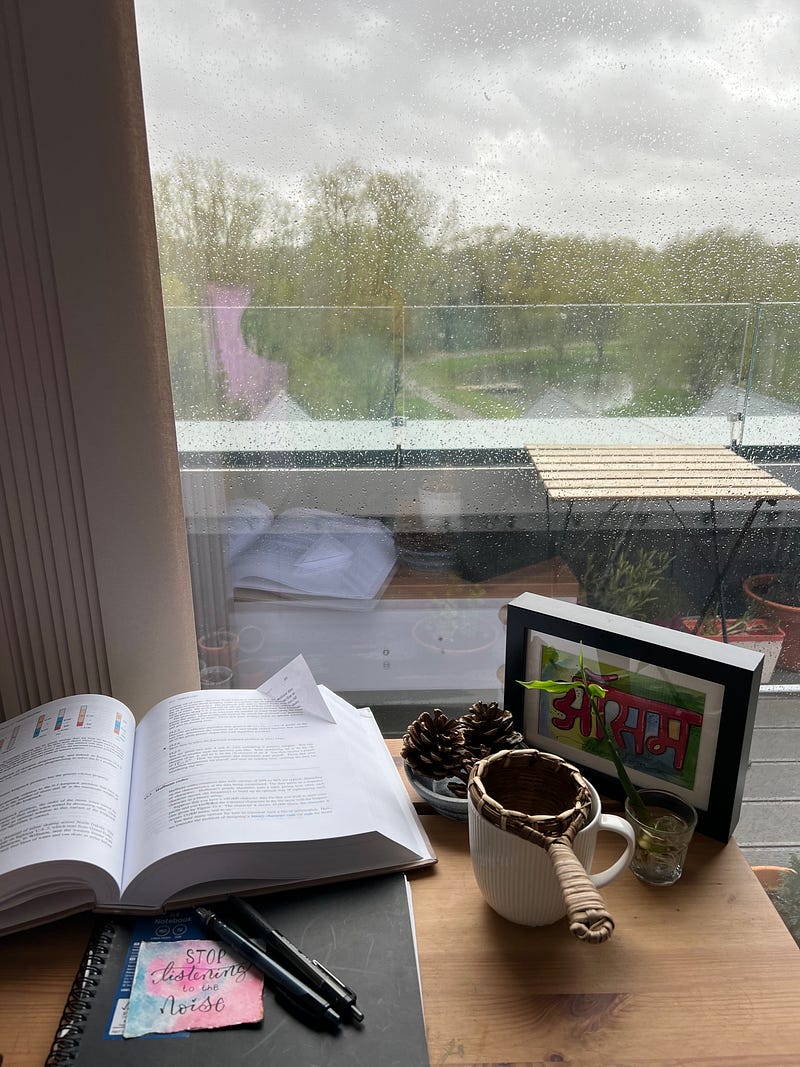
- set up the table where I would sit (basicaly clean it, keep my laptop, notebook, etc there)
- make sure I knew exactly what I had to do the next morning (topics)
- I also told my partner not to disturb me for those 20-30 minutes unless it was urgent.
- The phone stayed away, and social media was not allowed during that time.
This small preparation helped more than I expected. In the morning, I did not have to think. I just had to wake up, sit on the chair, and start.
That routine helped me clear an AWS cloud exam in around two months. I also started a small blog for cloud tips, built small practice projects, and later got involved in an internal cloud-related project at my company. I was able to do progress.
The learning here was very clear for me: when time is limited, preparation matters more. A small focused session is much better than a long distracted one.
Weekends were not for heavy learning
One thing I did not want was to make my whole life about work. I knew I needed rest as well, especially because weekdays were already packed.
So I kept weekends flexible. Sometimes I used one Saturday or Sunday morning to revise what I had learned during the week, but I did not keep weekends for heavy active learning. If I was tired, I rested. If I had plans, I went out. If I wanted to revise, I revised.
This was important because earlier I used to create very strict plans, and the moment I missed something, I felt like I had failed. As well as, I was not reseting myself during weekends. My social life was going bad. This time I wanted a routine that could survive real life.
Another mistake: choosing the wrong learning format
During my cloud learning phase, I also enrolled in live classes. For me, it turned out to be a waste of money.
The classes were not necessarily bad, but the format did not work for me. Fixed-time classes, long sessions, and following one structure exactly as given did not suit how I learn. I prefer searching for a topic, watching different explanations, reading docs, and choosing whatever helps me understand better. I prefer learning in my own pace.
That experience taught me something important. A course can have good reviews and still not be useful for you. A teacher can be popular and still not match your learning style.
Since then, I have become more careful before buying courses or joining cohorts. I ask myself whether I will actually attend it, whether the format fits my routine, and whether I am buying it because I need it or because everyone else is talking about it.
Most of the time, I already know the answer.
Phase 2: Moving to the UK and changing my routine again
After moving to the UK, my routine changed a lot. The work-life balance was better, there was no late-night work, and weekends were actually weekends. Even public transport felt calmer compared to what I was used to, so I did not feel completely drained by the time I reached home.
Naturally, my productivity improved.
But I want to be honest here: it was not just because I suddenly became more disciplined. The environment changed. My energy after work changed. My mental space changed. All of this made learning easier. Commute was calmer.
This time, my focus was DSA and system design. Again, I did not try to add ten goals just because I had a little more time. I picked DSA for the morning and kept system design as a slower, ongoing goal.
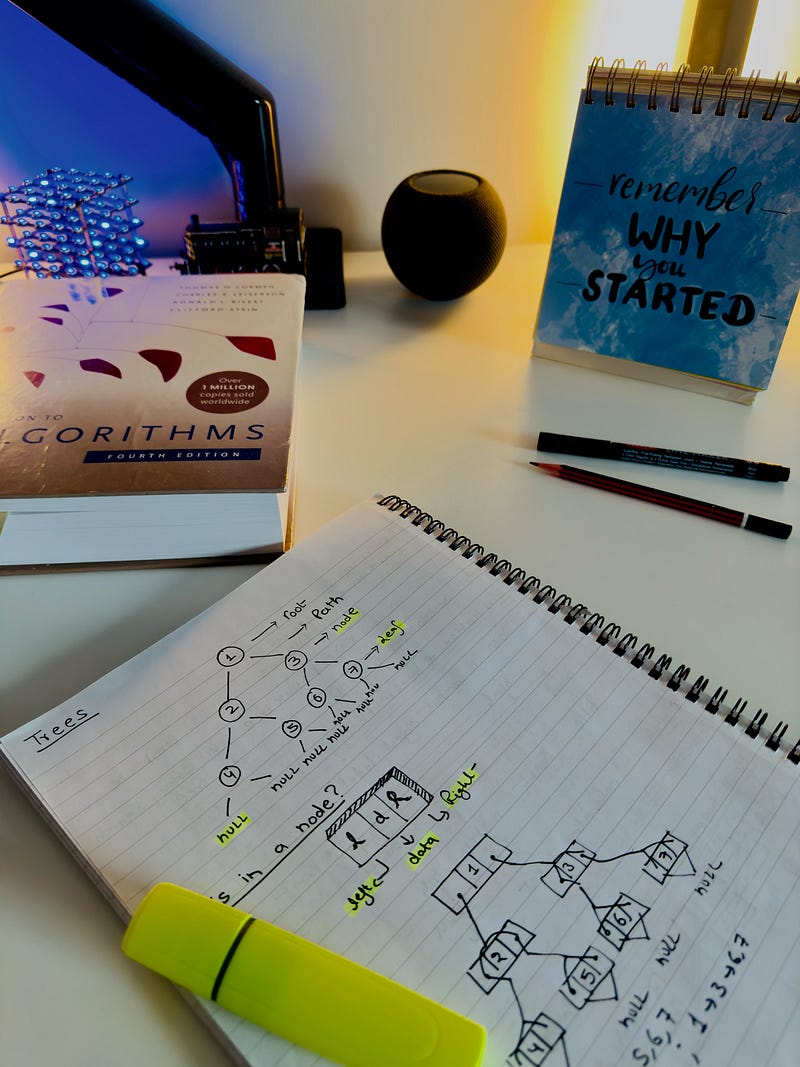
For DSA, I made a simple rule: no laptop in the beginning. I used paper and pen because it forced me to think instead of quickly running code and checking the answer. I would learn a concept, solve problems, and sometimes explain the concept to my husband. Teaching it back helped me understand whether I actually knew it or was just assuming that I knew it.
My commute time also became useful in a light way. I would either read a book, tech or non-tech, or watch YouTube videos . I did not treat commute as a strict study slot. It was more like optional learning time. My one train used to take 30 mins and that 30 mins helped me a lot eg: I learned a lot of tech concepts in my commute, or just read a few pages of a book.
Also, in the UK there are no spam calls/sms and tbh, this is so amazing. As I can focus without getting distracted again and again by spam calls/sms

Weekends were strictly for rest. I still read books in the morning, but I stopped keeping big study targets for weekends. I wanted weekends to feel like weekends. Also, learning over weekdays became enough for me. And this has became a upgrade. Now, my all work and learning is only from Mon-Fri.
This routine helped me clear DSA rounds and improve my system design understanding over time.
Learning with others did not always work for me
I also tried collaborative system design sessions. Some of them were really good, and I learned a lot from discussing with other people. But for working professionals, it is genuinely hard to maintain a common schedule. Everyone has work, family, health, travel, and random life things going on.
We did many good sessions, but eventually life happened and the routine slowed down.
That made me realise that, at least for now, I prefer solo learning for most things. It is not because group learning is bad. It is just that solo learning gives me more flexibility. I can go slow, go fast, repeat something ten times, skip something, or change the resource without worrying about anyone else’s pace.
Maybe this is my personal issue, but in group learning I often feel that either I am slowing someone down or someone else’s pace is slowing me down. Solo learning removes that pressure.
What changed between India and the UK?
When I compare both phases, my productivity definitely improved after moving to the UK. But I do not want to make it sound like the only reason was better planning. Work culture, commute, rest, and mental space all played a role.
In India, I had to create a very tight routine because my time and energy were limited. In the UK, I had more breathing space, so learning felt easier. But the main principle stayed the same: I still limit my goals.
That is the part I want to highlight. Even when I had more time, I did not suddenly start adding more and more goals. I still tried to focus on one or two things because I know how quickly “I want to learn everything” can become “I am too overwhelmed to learn anything.”
I also started valuing rest more. I like travelling, nature walks, slow mornings, and just doing nothing sometimes. Earlier I used to feel guilty about rest. Now I do not. If my mental health is not good, I cannot learn properly anyway.
This whole process helped me to balance my mental & physical health with keep learning. For me, my health is a top priority, then my full time job and rest after that. So, my whole schedule is planned around, I will sleep by 11pm, my job is 9-6pm, now, I need to plan everything around it.
How I manage learning now, especially with AI
Now with AI, learning has changed again. There is always something new: a new tool, a new model, a new framework, a new course, a new trend. It is exciting, but it can also become too much very quickly.
People sometimes see me reading books, posting on social media, blogging, building projects, giving talks, learning AI, travelling, and working full-time, and it may look like everything is happening at the same time. But internally, it does not work like that.
I work in phases. Some weeks are for deep learning. Some weeks are for writing more. Some weeks are for building projects. Some weeks are just for maintaining the habit. And some weeks are slower because life needs more attention, I fall sick, or motivation is low, and as I say adulting take over everything.
AI helps me learn and build faster, but I try not to let it increase my pressure. I do not want AI to become another reason to overload myself.
My current approach is simple. I pick one main learning goal, decide the next small step, use AI where it helps, and try to create some output from what I learn, either through writing, building, or explaining. But I also stop when I feel it is affecting my health or personal life too much.
There is no point learning every new thing if you are constantly exhausted.
My main learnings
The biggest learning from all these years is that consistency does not come from motivation alone. It comes from making the routine small enough to repeat.
- I learned that one or two focused goals are better than a long list of half-done goals.
- I learned that I don’t need to be a resource hoader. Pick only 1-2 resource and let go of other.
- I learned that not every meetup or conference is for me. I can just sit at home and enjoy watching a movie.
- I learned that quality sleep matters more than late-night productivity.
- I learned that preparing the night before can make a small morning session very effective.
- I learned about me that for me not every popular course or cohort will suit my learning style. And most importantly, I learned that rest is not the opposite of progress.
- I learned that for me what works best is pick certifications as a goal to have a structure learning & keep a ETA. eg: after 1 month of learning cloud, I was confident that my routine is there, I am able to understand cloud. So, I went ahead and book the exam.
- I don’t need to aim for, I will study for 1hr or 5hr. I need to just make my brain and body to focus for 15 mins, 30 mins and that’s all.
For working professionals, learning has to fit around real life. We have jobs, homes, relationships, health, responsibilities, and unexpected things happening all the time. A routine that ignores all of this will not last.
Final thoughts
If you are working full-time and struggling to learn, my suggestion is not to push yourself harder immediately. First, reduce the load. Pick fewer goals. Choose fewer resources. Decide your topic before you sit to learn. Keep the learning window small if that is all you have. Protect your sleep. Take breaks without guilt.
A 20-minute focused session may not look impressive from the outside, but if you repeat it consistently, it adds up. Consistency is the key.
I still have days when I waste (rest) time. I still have phases when I lose track. I still get tempted to start five things together. But now I catch myself faster and come back to the basics.
That is what has helped me keep learning without burning out.
Thank you for reading this. If you like this, then please share in your network . You can contact me at X or LinkedIn
Happy Learning!!